More than one hundred years after “the war to end all wars”, the young men who left South Orange forever to die in France are remembered throughout the Village — sometimes in places you’d least expect.
Beyond the flagpole located at South Orange Avenue and Irvington Avenue, the plaque within Columbia High School, or a memorial inside St. Andrew & Holy Communion Episcopal Church on Ridgewood Avenue, there are individual plaques on podiums scattered throughout South Orange, providing surprising remembrances.
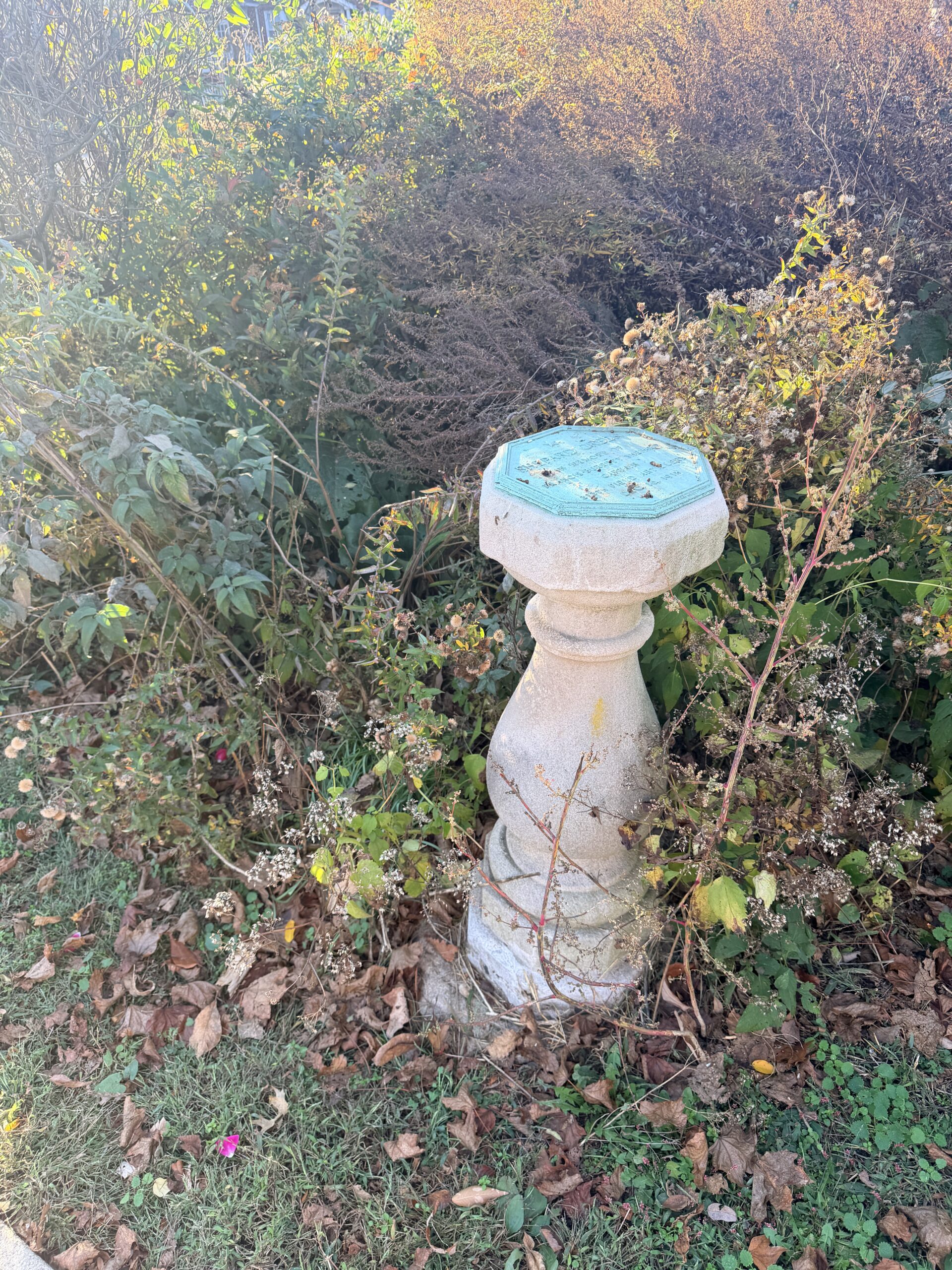
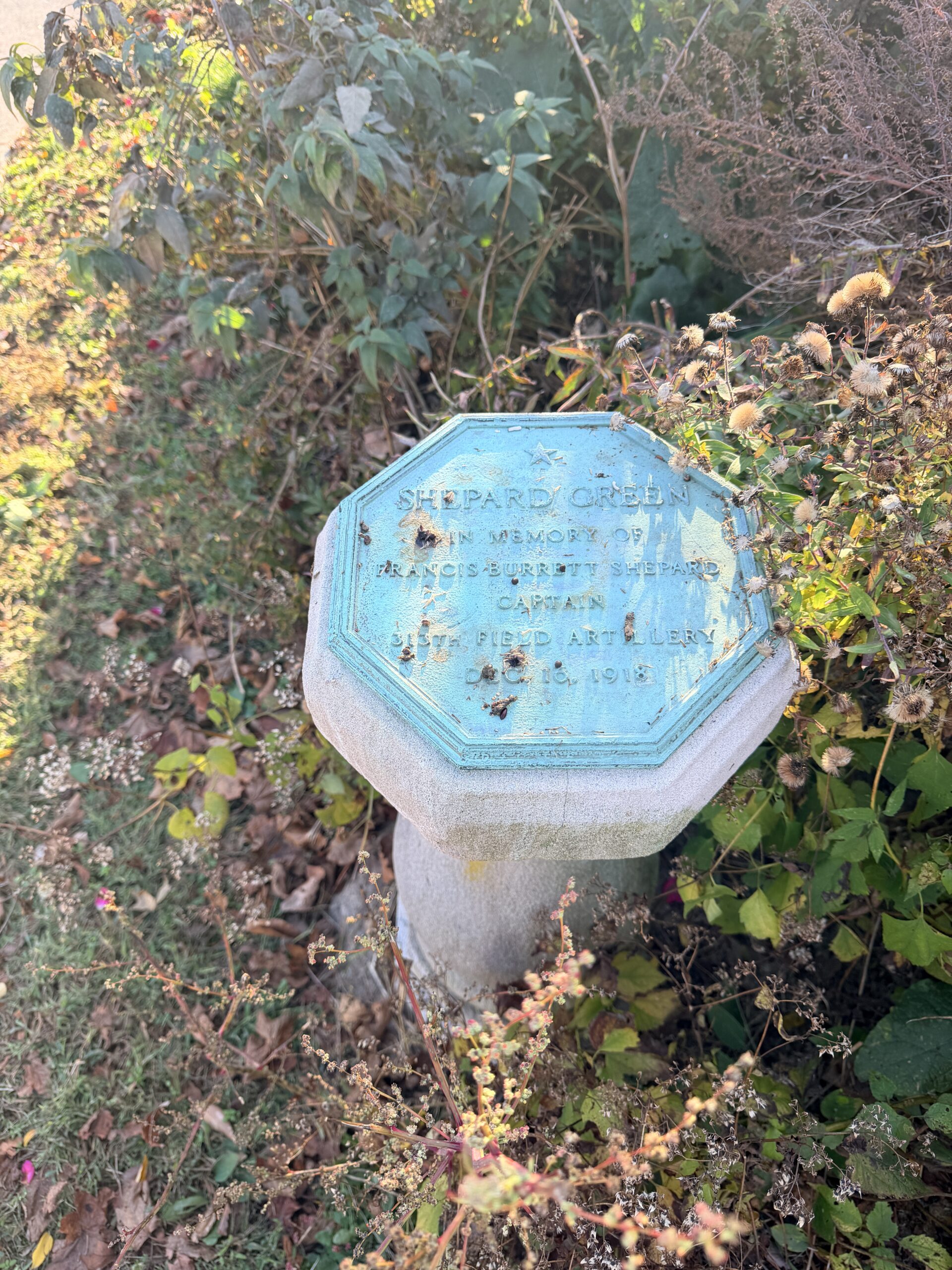
A memorial for Frances Burrett Shepard is located at Tichenor and Garfield:
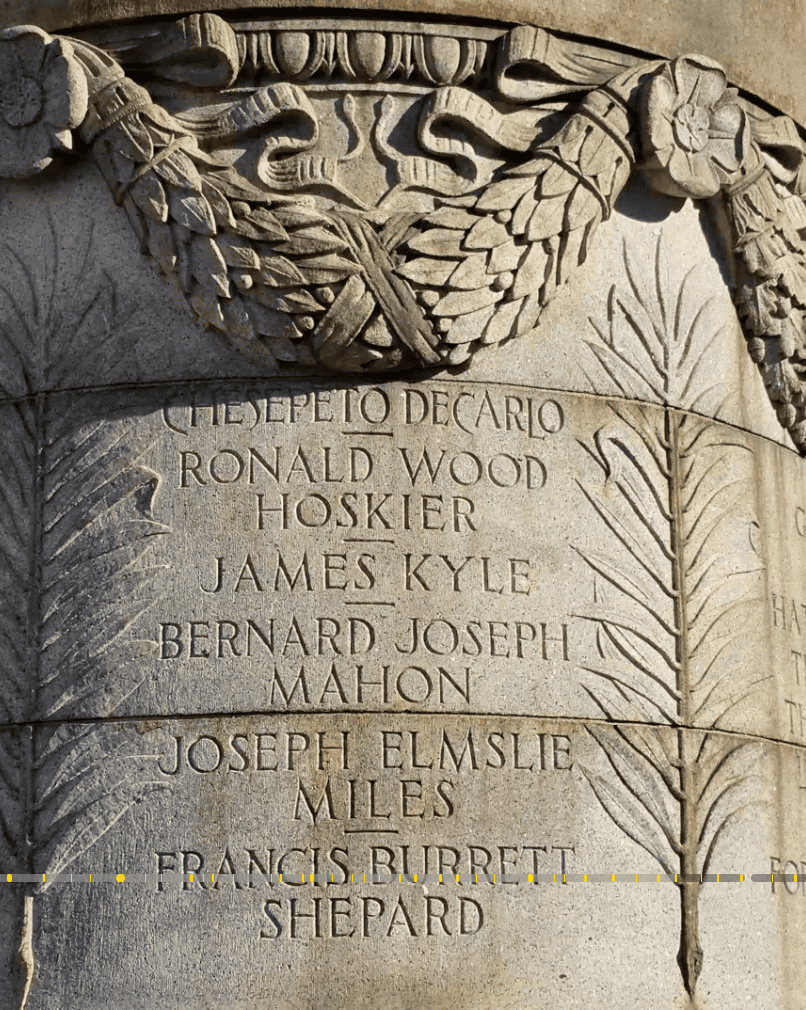
“I’ve been by it a million times but not until I physically went to look for it did I find it,” said retired Lieutenant Colonel Richard Wasserman about a plaque for Ronald Wood Hoskier that is located not far from the flagpole on South Orange Avenue.
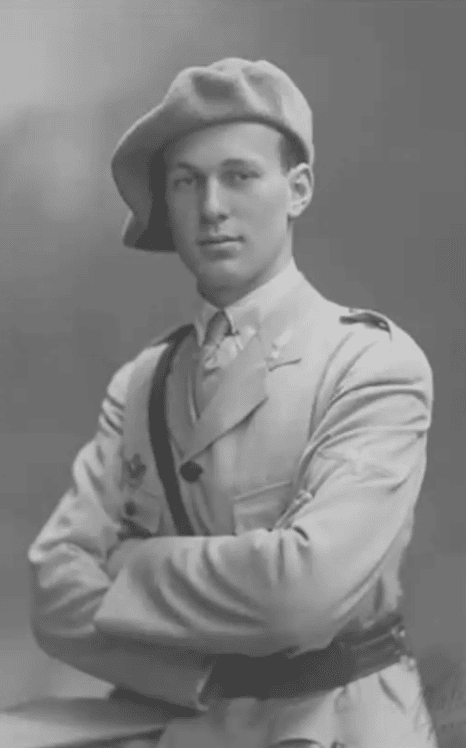
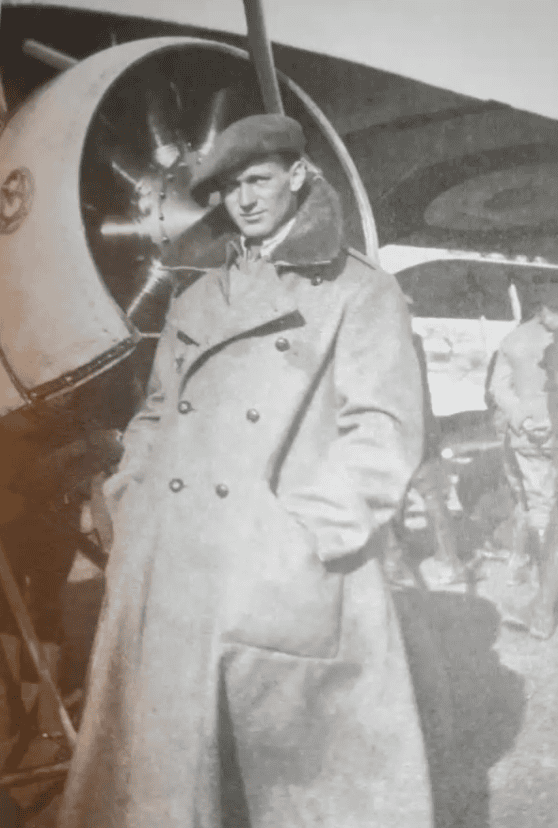
Wasserman provided a history of Hoskier — a scion of a prominent South Orange family who died at age 21 in air combat over France — during a presentation highlighting research for his book, “The War to End All the Wars: New Jersey’s Role in World War I” at the November meeting of the South Orange Historical and Preservation Society on November 4.
Hoskier’s “family was Red Cross volunteers in Europe, and he went along,” said Wasserman. “He obtained his private pilot’s license in France, and was joining what was to become the Lafayette Escadrille. He was one of the initial members of that unit.”
The Hoskier family is related to the Redmond family, whose family home became Orange Lawn Tennis Club. To this day, streets in the Village bear the names of both families.
Photos of Ronald Wood Hoskier provided by Wasserman:
In painstaking fashion, Wasserman presented evidence of his searches to find the final resting places and histories of the men — some of whom were brought home at great expense by their families and others who were interred in France by the U.S. government.
Through photos, ship manifests, death certificates and other documents, Wasserman built an intimate picture of the men and their families.
Only two of the local men fell in combat, said Wasserman. The others died of the flu.
Corporal Joseph Elmslie Miles died in hospital in France on Feb. 14, 2019, but Wasserman found his final resting place of in Madison, NJ, where he is buried under a tree. Miles’ grave had been overtaken by roots and ground growth.
“I had to dig it out. It was covered with dirt and ivy and all sorts of things,” said Wasserman.
“When I started looking for him, they didn’t know where he was.”
Miles’ death certificate lists his “emergency address” as “Ms. Angela Miles, (sister), South Orange, N.J.”
“His particular plaque was originally in front of Seton Hall, but then they redid the intersection, his plaque is now in front of the police station,” said Wasserman.
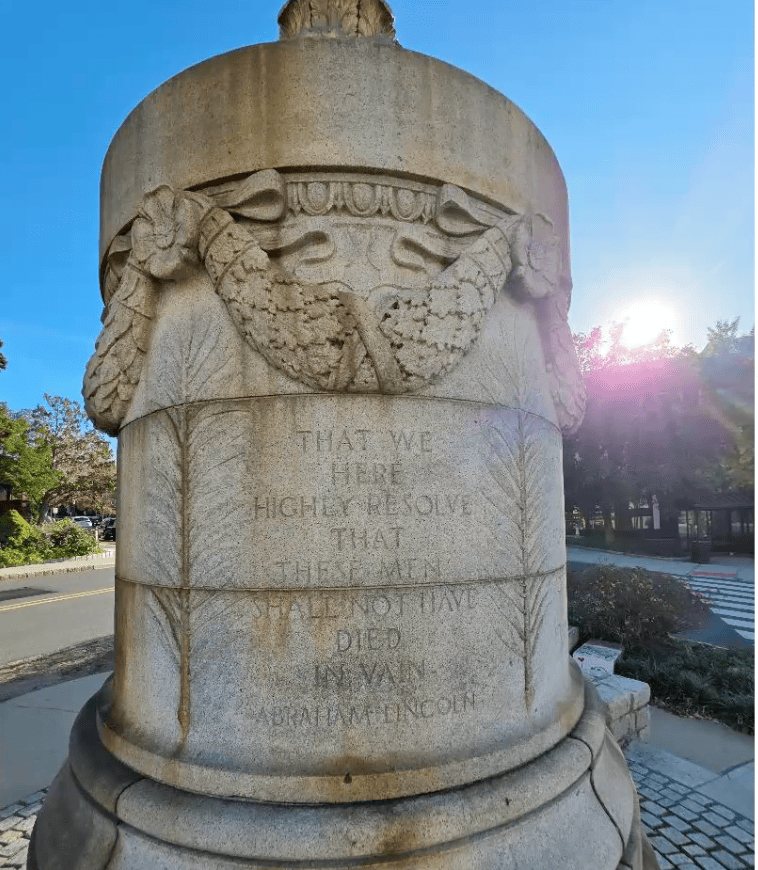
Details of the South Orange WWI flagpole memorial. Photos by Richard Wasserman:
Other local memorials
Francis Burrett Shepard’s memorial is at Tichenor and Garfield, surrounded by flowers three seasons a year. “It’s beautiful,” said Wassermen.
Bernard Joseph Mahon’s memorial is between the Duck Pond and The Baird Center.
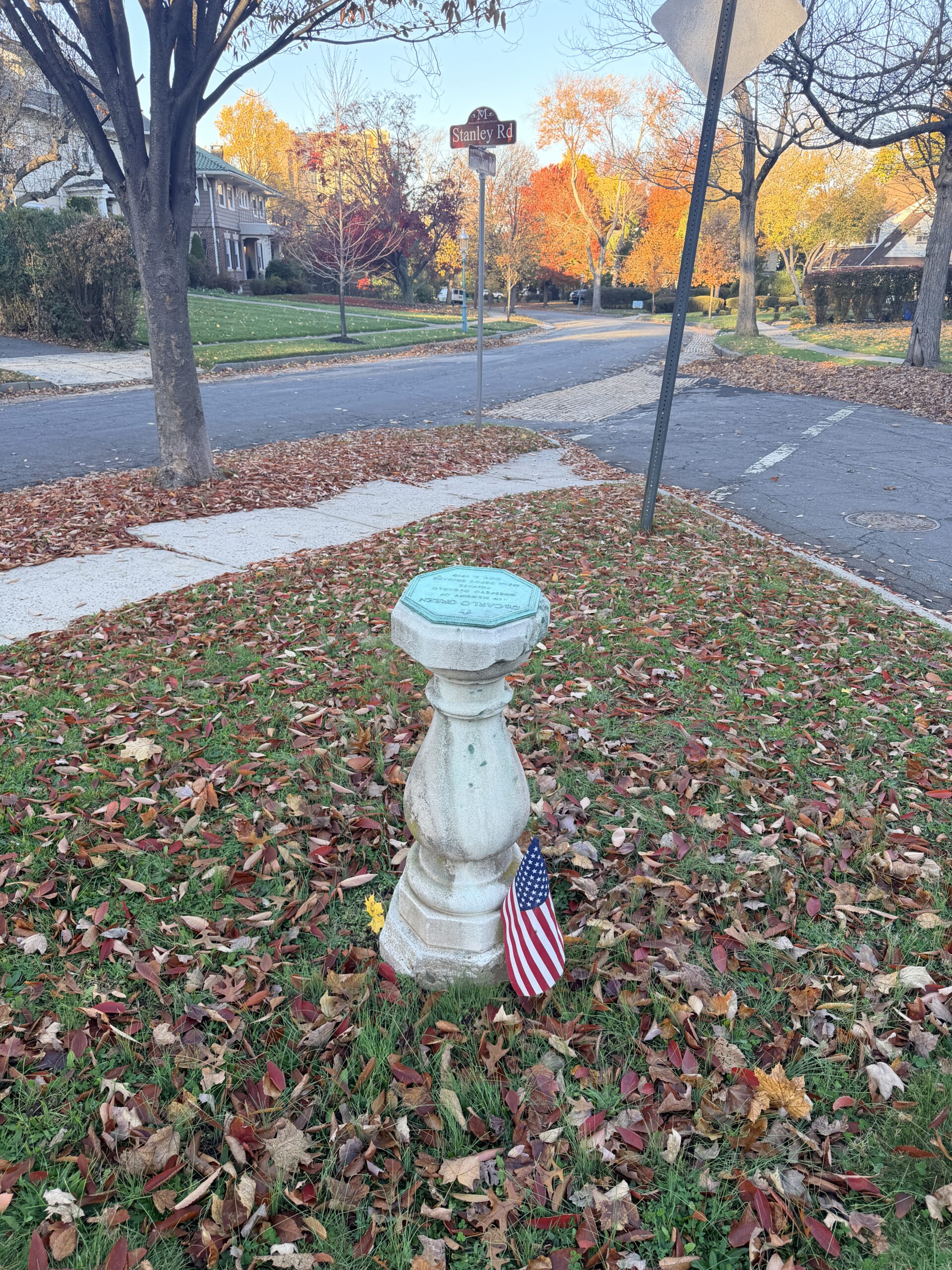
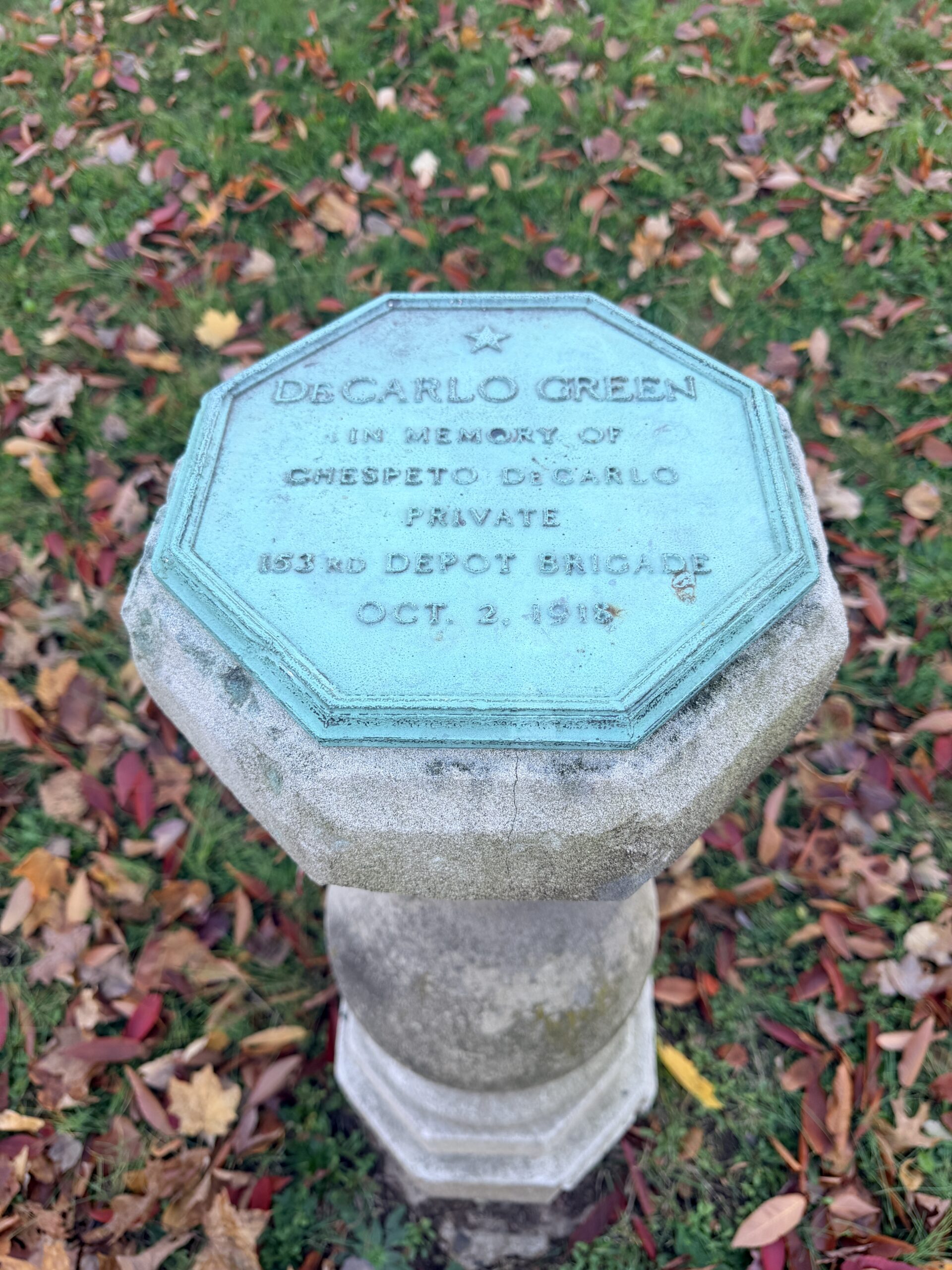
Chesepeto Carlo’s memorial is located at Stanley and Hamilton. Wasserman said he had a “helluva time” trying to find information on Carlo, because his name is wrong on the memorial and elsewhere, listed as “DeCarlo.”
Chesepeto Carlo’s memorial at Stanley and Hamilton in South Orange:
George Baldwin McCoy, who died in combat at the second battle of the Marne, was initially missing from the flagpole and was added this century. He has no local monument.
Private James Kyle is the only man listed on the flagpole without a local monument, but a plaque for him exists in a church in County Antrim, Northern Ireland — from whence he emigrated before fighting in the war.
Private Ralph Jacob Garrett Lane is missing from the flagpole and has no personal memorial. He was also killed in combat. His address is listed as 22 Wetmore Avenue, South Orange, N.J. — which was then a part of South Orange Township, not South Orange Village. The Township was renamed “Maplewood” in 1922.
Private Harry Smith died of bronchial pneumonia in October 2018. Wasserman said he hasn’t found much information on him as yet, attributing that difficulty to the fact that his name is so common.
Wasserman discussed the lasting impacts of the war.
“People think World War II was the biggest deal ever. Well, not really. World War I still has more lasting effects on the world today,” he said elaborating on the end of dynasties and the lasting economic and political impacts on Germany and in the Middle East.
“We’re still suffering from the fallout.”
Watch Wasserman’s SHPS presentation here. The book is available at the South Orange Public Library or for purchase online here here.