An upcoming Veterans Day ceremony at Columbia High School aims to correct the record by honoring Black WWI veterans not listed on the school’s commemorative plaque that was installed decades ago.
Easily visible to anyone stepping though the main entrance, the WWI commemorative plaque at CHS holds the names of 270 veterans and men and women from the South Orange-Maplewood community who served in the war effort.
However, some local veterans never received recognition. Until now.
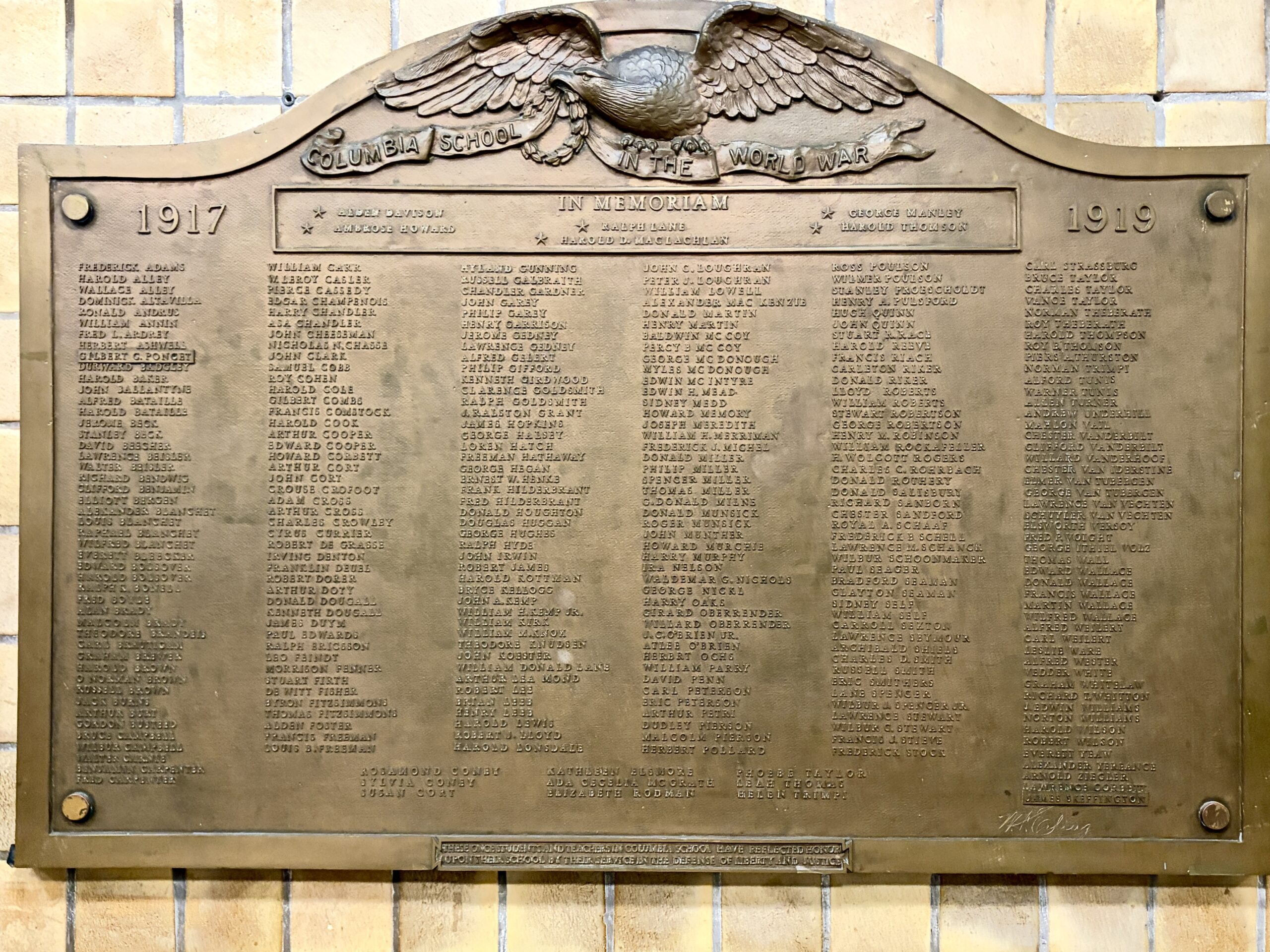
The commemorative plaque in the main hallway of Columbia High School honors those who served in WWI.
Volunteer archivists and former district teachers discovered the first missing vet while looking into a former South Orange High/Columbia High School student, Alice Johnson, the only Black student in her class.
One of those archivists and former teachers, Anne Wessel, recalls what she thought when she first found Alice: “What was it like for her? What was it like to be the only student of color in that class?”
Wessel’s interest was piqued. “I asked a friend to find more, and she found Dudley.”
Wessel was surprised to discover that Dudley was a 1910 graduate of South Orange/Columbia High School and served in WWI, yet his name was not on the plaque.
After further investigations, they found a total of five confirmed WWI veterans whose names had been left off of the original plaque. Besides Dudley Johnson, the others are: William W. Baskerville, John L. Beach, Edmond B. Jackson and Eardley Washington.
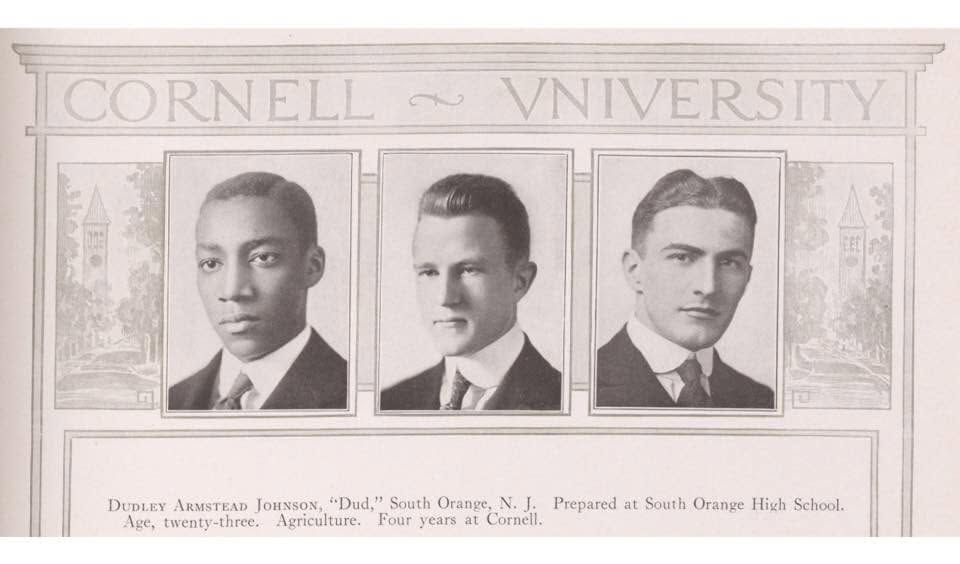
At left is Dudley Johnson, one of five WWI veterans and South Orange High School graduates (later Columbia High School) whose names will be added to the WWI commemorative plaque at CHS on Veterans Day. (Photo taken from the Cornell University Yearbook.)
South Orange Council members Summer Jones and Patricia Canning got involved and helped track down family and helped to officially give the servicemen the recognition they deserve.
“It went from being one person to five people that we found – and we suspect that there are more,” Jones said. “After we found these veterans, we wanted to check all the names. There were 200+ names, teachers, students, nurses, we couldn’t find one Black name. It was something that was of the time.”
The South Orange and Maplewood community has always prided itself on its diversity. However, the stories of Black and brown community members sometimes go untold – and their history in the towns goes back further than many people realize. At this moment, their stories are more relevant than ever, the council members said.
“In August, we also did a summary of businesses that existed in the 1920s in South Orange, [specifically] Black businesses. And there we saw the diversity of South Orange in that time. We saw how these companies thrived during that time,” said Canning. “So that spoke to the opportunity that existed for Black families at that time. And then we skip forward a few years, many years ahead and we wonder about progress and we wonder about the fact that these men were left off.”
Wessel said: “We have so much material going back to 1814 including books of photographs of students and whenever people see those students from the early 1900s they are surprised to see so many children of color in those books. So I don’t think we really have a good sense of our history.
“Certainly, nationally, there is an initiative to deny history or hide history, and I think it says a lot about our community that we are not interested in participating in that,” Wessel said. “We want to know what things were like and I think it affects your identity when you realize what this community was about for a hundred years.”
Jones described the histories of the veterans: “Edmond Jackson; he was a Harlem Hellfighter… When you look at all of them in their service, being Black in 1917-1918 within the war was very difficult for those soldiers, fighting for a country that didn’t really accept you.”
“The same way they were treated in the military was the same way they were treated… seemingly all of these men survived; some of them would have been around when the plaque was put up,” Jones said. “The thought process of these men not even being posted on there, how they would have felt… it’s really difficult to think about.”
But now, the record is being rectified. And descendants of some of the servicemen – including 10 members of the Baskerville family – will attend the plaque dedication ceremony, Jones said.
“When you ask how the family feels, based on the reaction of those that are attending, I think that they love that this is happening,” she said. “I think it’s really important that they appreciate it.”
Said Canning: “So many people understand the politics around it and so appreciate that it has been uncovered; this is a story that hits not just the family, but a whole community of people who understand what it means to rewrite history.
“There’s stories that were lost,” she said. “And maybe being on that plaque they would have been represented a little bit better.”
Jones said adding the names will be meaningful for students. “I think that for Black and brown students, looking at the veterans plaque and knowing that there were people that should have been on there and knowing that their story doesn’t have to disappear is really key,” she said.
Overall, Jones and Canning emphasized that efforts to recognize and uphold untold stories are a continuing commitment, and that there are still untold stories remaining in the community.
“We’re giving back their voice, their presence – that they were here, and that they served,” Canning said.
According to Wessel, the archives show that the plaque itself was never thought of as containing the definitive record; rather, it was something that was meant to be expanded on over time.
The Superintendent at the time of the plaque’s dedication, Henry Ward Foster, acknowledged that the list was incomplete, even adding a list of seven possible unconfirmed names at the end of his official letter, she said.
“I looked at all the people on his original list,” Wessel said. “All but one are on the plaque.”
Councilwoman Jones said the list may still not be complete.
“We suspect that there are more – more students that were left off,” she said. “There’s stories that are lost, and maybe being on that plaque they would have been represented a little bit better.”
The ceremony will also include students, but there is not room to open it up to the public, since it is inside Columbia High School during the school day, Jones recently told the public at a Village Council meeting last week. But, she said, it will be recorded.
Adair Curry is a 12th grade student at Columbia High School who is working with Village Green as a paid student freelancer through a grant from the NJ Civic Information Consortium.
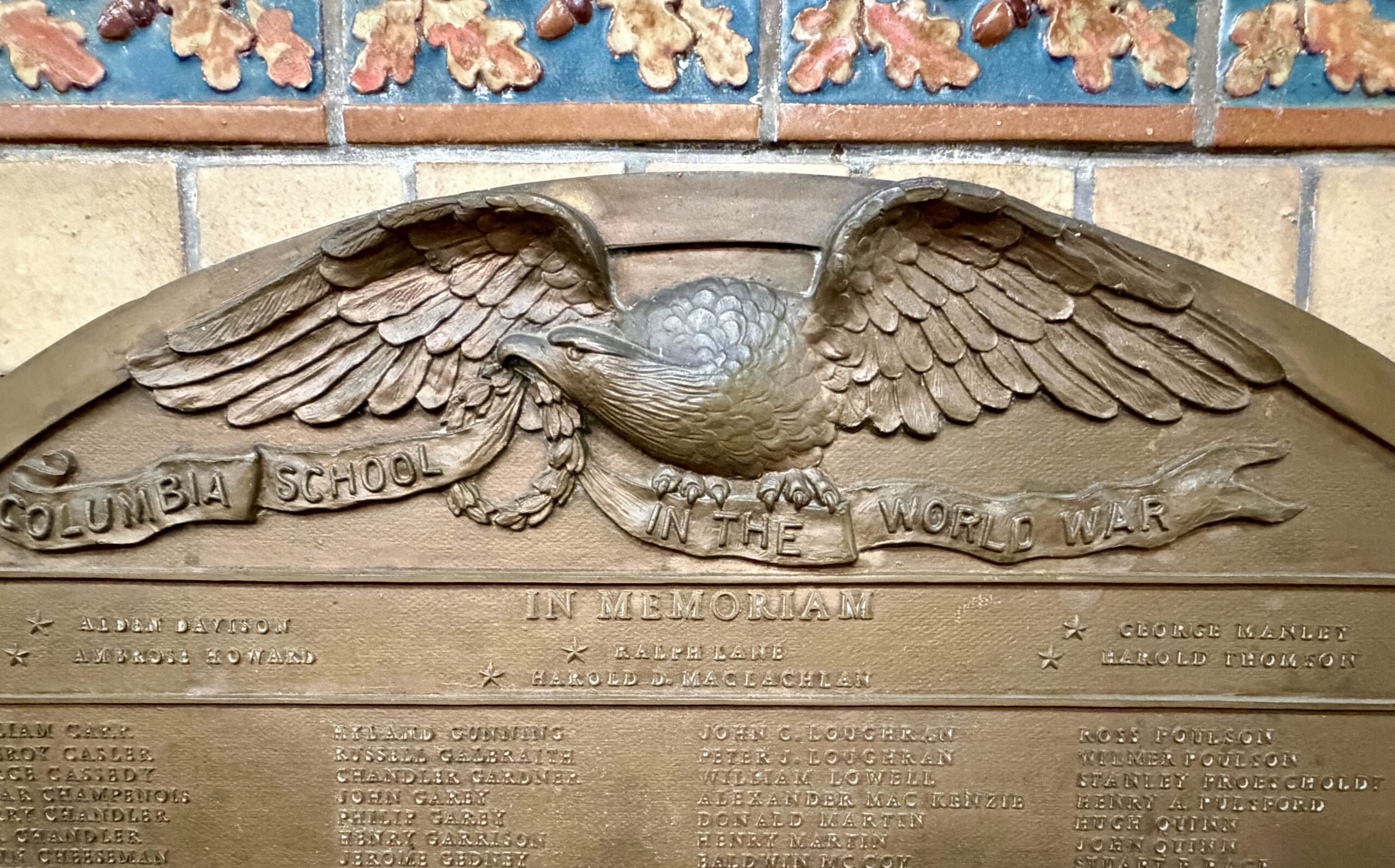
Detail of the top of the plaque at CHS.