As 25 students file into Columbia High School’s Columbia Cougar News classroom, they aren’t just preparing for another class; they’re producing content published to their YouTube channel that reaches the entire school and, in some cases, promotes real-world change.
At the core of the TV Production and CCN program is advisor Anthony Campiglia, who has built a space that blends creativity, independence, and impact. Through his classes, students take on roles as editors, anchors, and directors, creating weekly broadcasts while also contributing to larger initiatives like U Got Brains, a campaign focused on teen driving safety and preventing brain injuries.
“I want them to come away from the class having had a lot of fun,” Campiglia said. “But also learning real-life lessons, things they can take with them outside of school.”
Anthony Campiglia, known at CHS as “Mr. Camp” wants students to have fun along with learning skills and life lessons. (Photo courtesy of Anthony Campiglia)
Campiglia, known to students as “Mr. Camp,” describes his role not as a traditional instructor, but as a guide. Students say the approach has helped him earn recognition as a candidate for America’s Favorite Teacher, a national contest run by Bill Nye the Science Guy and the fundraising organization Colossal. (Voting for the TOP 15 ends Thursday, April 2 at 7 p.m. PDT.)
Students say Campiglia’s approach also gives them a sense of ownership and creative freedom rarely seen in a traditional classroom.
“My role in CCN is mainly editing episodes and segments. For U Got Brains, I help come up with ideas and create graphic designs,” said senior June Vitale. “Mr. Camp has helped me grow as a creative thinker. Through CCN, I’ve gotten better at video editing and digital design, which wouldn’t have happened without his influence.”
That freedom is a defining part of the program, especially for student leaders like senior Liad Saadia, one of CCN’s directors.
“As a CCN director, my role is to make sure everything is functioning in the class, communicate with Mr. Camp, and also participate as a student to help our class create content,” Saadia said.
“There are two things that make CCN different: the creative freedom we have to make content we actually want to share, and the fact that it reaches the whole student body and connects with people,” he added.
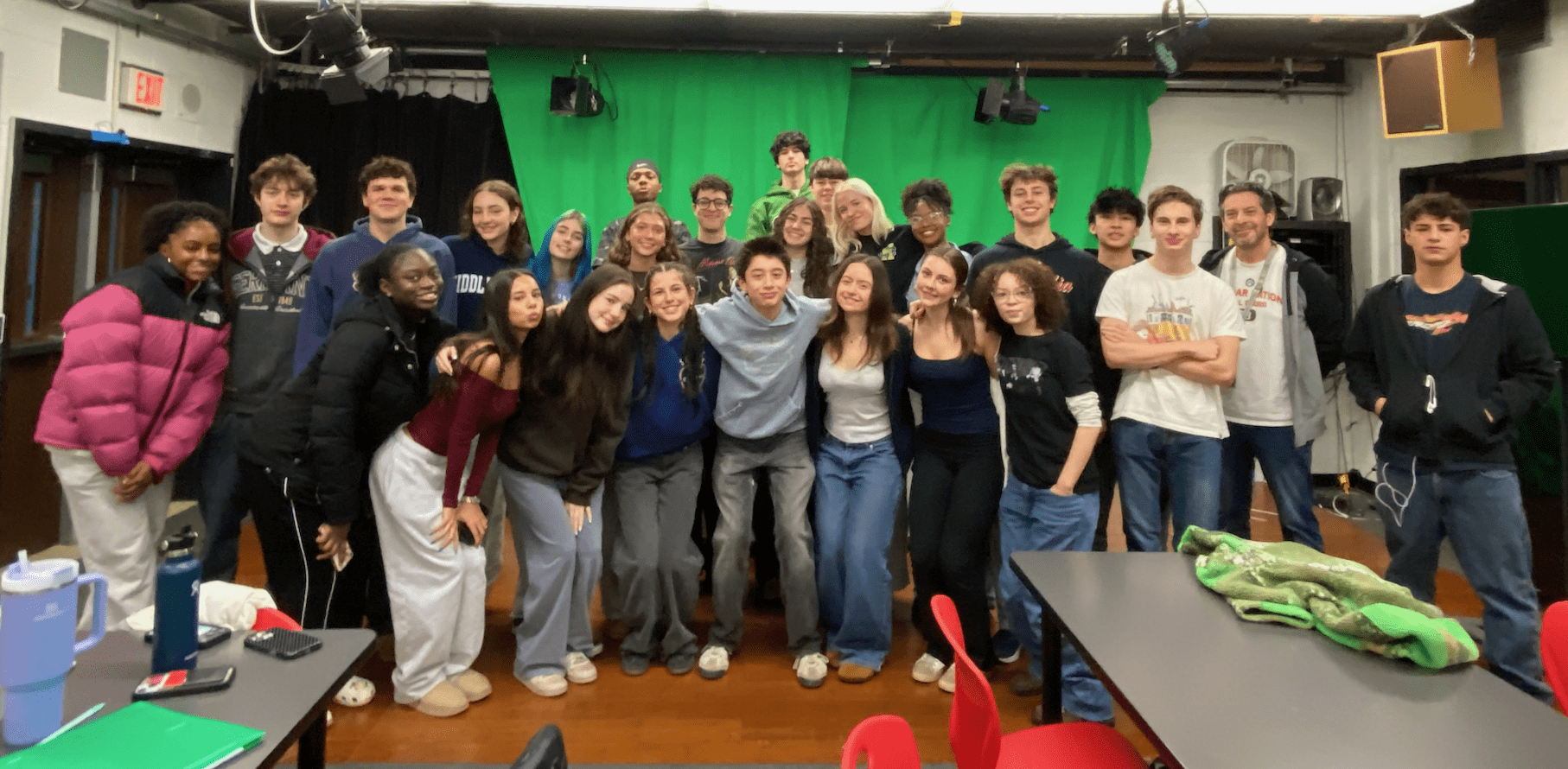
Mr. Camp, back row on the righ, with his CCN students in the studio.
With about 25 students involved, CCN operates as a collaborative, student-run production environment where each member plays a role in creating content.
That emphasis on independence is especially clear in projects like U Got Brains, where students develop full-scale campaigns around real safety issues.
“For U Got Brains specifically, it’s always an important topic,” Campiglia said. “This year, it’s helmet safety for e-bikes and regular bikes. The students come up with an entire campaign, approaching it from different angles, not just a simple video.”
Students are involved in every step of the process, from research to outreach.
“They’re going out and talking to people, doing research, setting up interviews even with organizations like the Maplewood Police Department,” he said. “It gives them real-world experience.”
According to Campiglia, that peer-driven approach is what makes the message more effective.
“Students will listen more to their peers than adults a lot of the time,” he said. “When the message is coming from one of their own, it has more impact.”
Vitale agrees, noting that the work extends beyond the classroom.
“I think the work we do, especially with U Got Brains, makes a real impact in our community,” she said. “It focuses on real safety issues and aims to improve them, so we’re able to impact students at our school directly.”
Saadia added that the impact reaches even further.
“I do think the content we make impacts people,” he said. “It gives parents an inside look at students’ days, and I know teachers who play our episodes every day. It also helps keep students and staff informed through announcements and coverage of events.”
Campiglia also emphasized that the goal is for these campaigns to last beyond a single project.
“We don’t want it just to end,” he said. “We pass it along to health teachers so it can continue to be used and educate students in the future.”
Beyond technical and academic growth, Campiglia hopes students develop a deeper sense of responsibility.
“I hope they gain ownership,” he said. “Like, ‘this is mine, I have to get it done.’ And when they do, I hope they feel proud of what they created.”
Over his 20 years of teaching, Campiglia says the most rewarding part has been watching students grow and succeed beyond high school.
“I’ve had so many great students,” he said. “What really makes me happy is when I hear from them later, and they tell me how much CCN helped them even in small ways at their jobs or in college.”
He also values the relationships that extend far beyond the classroom.
“I consider my students my school family,” he said.
That sense of connection has become even more meaningful as Campiglia continues teaching while living with multiple sclerosis.
“I always feel bad when I’m not here,” he said. “But when I come back and see the reaction from students, the signs, the support, it just makes me feel so appreciated.”
Students say that support goes both ways.
“Mr. Camp has impacted me in a lot of ways, but the biggest is how he shows us to be understanding of others and what they’re going through,” Saadia said. “He’s always able to adjust and make sure we’re supported, no matter what he’s going through himself.”
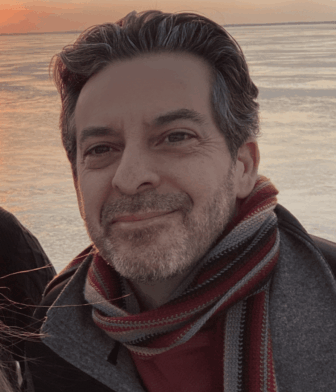
Anthony “Mr. Camp” Campiglia
Even with the program’s professional expectations, students say the class remains close-knit and personal.
“I think people don’t realize how close we are as a class and how much we collaborate,” Saadia said. “Even the things we do outside of school as a class are often overlooked.”
“My favorite memory from CCN was when Mr. Camp came back after being out sick for a few weeks, and we gave him posters we made for him,” Vitale added.
In addition, being in the running for America’s Favorite Teacher is a recognition Campiglia describes as humbling.
“The outpouring of support has just been incredible,” he said. “It really makes me feel appreciated.”
Looking ahead, Campiglia says he hopes students leave his class with more than just skills.
“I just hope they had fun,” he said. “And that years from now, they can look back and say, ‘Do you remember that time in CCN when we did this?’”
Francesca Cudrin is an 11th grade student at Columbia High School and is working with Village Green as a paid freelancer through a grant from the NJ Civic Information Consortium. She is also part of Columbia Cougar News.