This fall, four candidates are vying for three seats on the 9-member South Orange-Maplewood Board of Education: Trish Azeez, Liz Callahan, Kevin Diaz, and Will Meyer. Village Green has invited all candidates to submit a profile. Election Day is November 3. Read more election coverage here. The following profile is from Kevin Diaz.
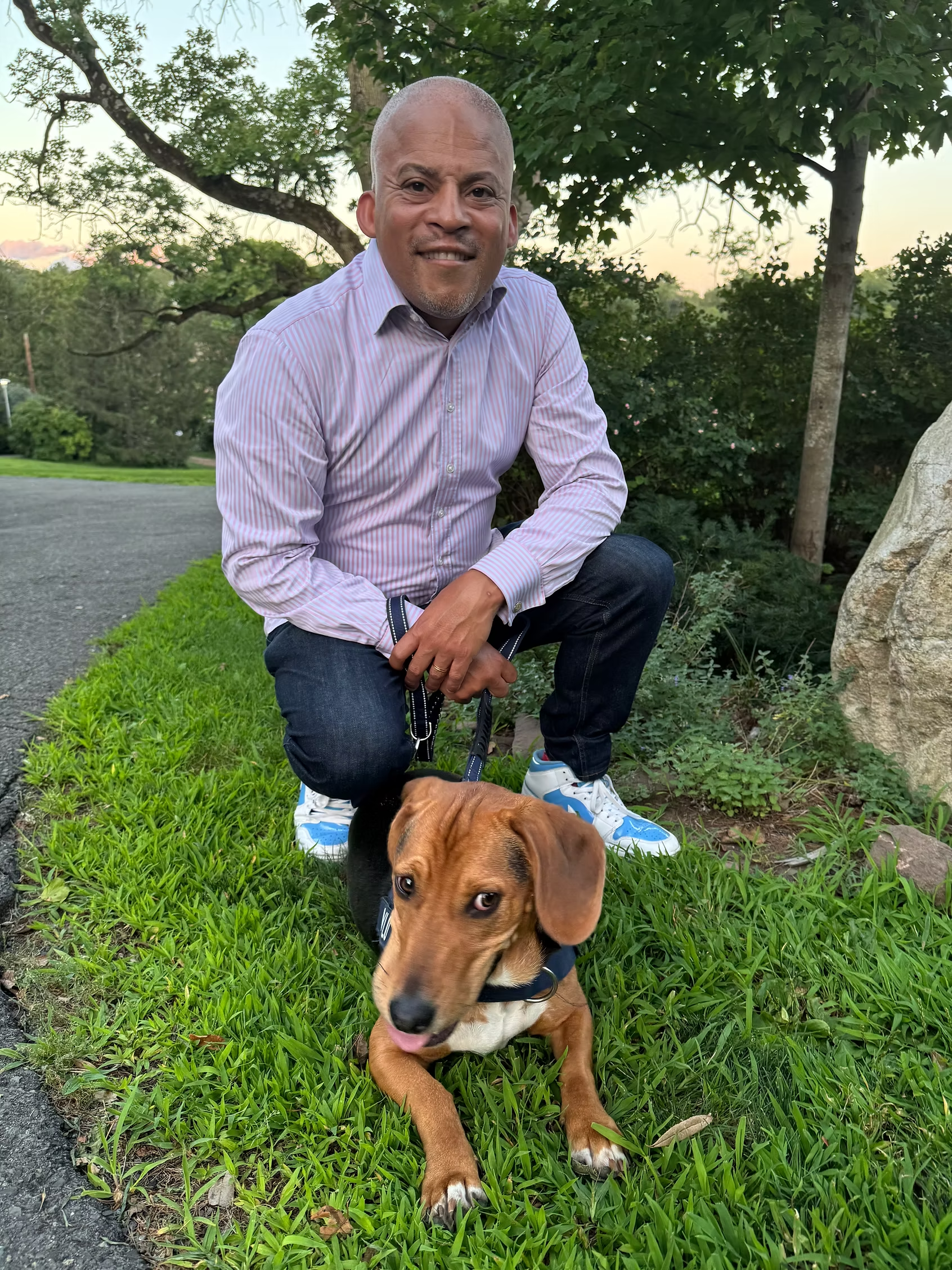
I have always had a deep belief in the importance of community service and am thankful for the generations of activists who came before me, helping win the many rights we all enjoy today. Running for the Board of Education is my way of paying it forward.
I believe our school district can be one where every child is known, supported, challenged, and safe, and where families can trust that the district will do what it promises, in compliance with the law and Board policy.
Over the last several weeks, I have spoken with nearly two dozen parents, community members, educators and others who have shared their experiences with our schools. I have heard inspiring stories that remind me why I chose this community to raise my family. One parent became emotional talking about the experience her children had at Seth Boyden when it was a demonstration school. Other families have described teachers and principals who changed the course of their children’s lives.
At the same time, some of what I have heard has been deeply troubling. I have heard from families who felt they had to fight to get help for their children, families frustrated by bullying or special education services, and people concerned about facilities, school climate, and whether district policies are being carried out consistently.
What strikes me is the difference between those experiences.
My first response to what I’ve heard could be to dismiss the troubling accounts as hearsay or the opinions of a few parents who are “over the top.” I could also respond by saying that most of the problems don’t concern me or my son, so why should I worry?
I do worry because it takes a community and we all need to worry about what affects one another, and not just because it is our moral obligation. This has been reinforced recently by the open letter of Axel Takacs about the special education paraprofessionals explaining that many of the problems of others today could easily become our own problems tomorrow, ones which we as individual families are nearly powerless to address on our own.
A child’s experience in our district should not depend on luck. It should not depend on which teacher they happen to get, which school they attend, how effective their parents are in navigating the system, or how loudly a family is able to advocate.
We can do better than that. We need a school district that is capable of responding, where every teacher and principal is fully invested in helping every child, where it is part of the day-to-day fabric of our schools and where district-wide services operate within a system of effective checks and balances.
Three ideas guide the way I think about the work ahead: empathy, equity, and accountability.
Empathy means seeing students as individuals, not just as the categories with which we describe them. Every child comes to school with strengths, challenges, interests, hopes, and most importantly, potential. Students receiving special education services are each so much more than just their classifications. The same is true of students from economically disadvantaged families, immigrant students, children of color, LGBTQ+ students, and students who may be struggling in ways that are not immediately visible.
Equity means making sure students have access to the support and opportunities they need to succeed. It does not mean that every child needs exactly the same thing. It means the district has an obligation to understand what students need and make a serious effort to provide it.
Accountability means that policies and promises have to mean something. The Board as a body should set clear expectations, ask for meaningful data about whether those expectations are being met, make that information available to the public, and be prepared to act when the district is falling short. Families should not have to become experts in education law, district bureaucracy, or Board policy to get their children what they need.
Teachers and principals also need a district that supports them. We cannot expect educators to meet an enormous range of student needs without strong systems, clear expectations, useful resources, and leadership that helps them do their jobs well.
The Board cannot run the schools day to day. That is the Superintendent’s responsibility. But the Board does have an obligation, as it says in the New Jersey Code of Ethics for School Board Members, “to see that [the schools] are well run.” This means the Board needs to establish priorities, oversee the district’s performance, ask hard questions, make responsible financial decisions, and hold district leadership accountable for results. That is the kind of Board member I hope to be.
I believe our district can provide an excellent education while also being inclusive, fiscally responsible, transparent, and responsive to families. Those values do not have to compete with one another.
My platform explains where I stand on several of the issues facing our district and what I believe the Board should do about them.
ABOUT
Kevin Diaz lives in South Orange with his husband, their son, and their dog. After previously calling Jersey City and West New York home, Kevin and his family settled in South Orange in 2022 and have embraced the community as their own.
Kevin and his husband are the proud parents of a son who is entering middle school this fall. Like many parents, they think a lot about the kind of school experience they want for their child. Their experience in the district has been largely positive, and they are grateful for the teachers, staff, and administrators who have supported their son along the way.
Kevin brings more than 20 years of experience in customer service, hospitality, relationship management, and real estate. He began his career supervising customer service in the airline industry, went on to manage hospitality relationships and accounts, and is now a successful real estate broker serving families throughout North Jersey. His career has taught him how to listen, solve problems, build relationships, manage competing priorities, and remain accountable to the people he serves.
Service has always been important to Kevin outside of work as well. He has volunteered with God’s Love We Deliver, New York Cares, Hudson County CASA, York Street Project, and supporting senior housing communities in Jersey City and Bayonne, among other efforts through Keller Williams.
Those experiences have reinforced something Kevin tries to carry into everything he does: you don’t serve people by assuming you know what they need. You serve them by listening first.