Warning: This story contains discussion of suicide, depression, and death. If you are experiencing thoughts of self-harm or suicidal ideation, contact the 988 Suicide & Crisis Lifeline.
Named the 11th best book of the 21st century by The New York Times, The Brief Wondrous Life of Oscar Wao by Junot Diaz, published in 2007, has been a staple of the AP Literature curriculum at Columbia High School – until now.
With concern about student mental health, the District took the Pulitzer Prize winning book out of the curriculum for this year after being included in the CHS curriculum for more than 11 years, leading AP Lit students to start a petition to get it put back in, and the author himself weighing in.
The novel tells the story of Dominican-American Oscar Wao from Paterson, NJ. Told from the perspective of those who knew him, the book is a powerful work of fiction that AP Lit teacher Lori Martling said she uses to “give voice to the contemporary effects on identity by colonialism on marginalized groups.”
CHS graduate and former Lit student Penelope Takizawa-Soper says that “Diaz’s book drew me in because of its raw depiction of the immigrant experience and the repercussions of toxic masculinity…a powerful story about overcoming suicidality and societal expectations in order to live one’s best life.”
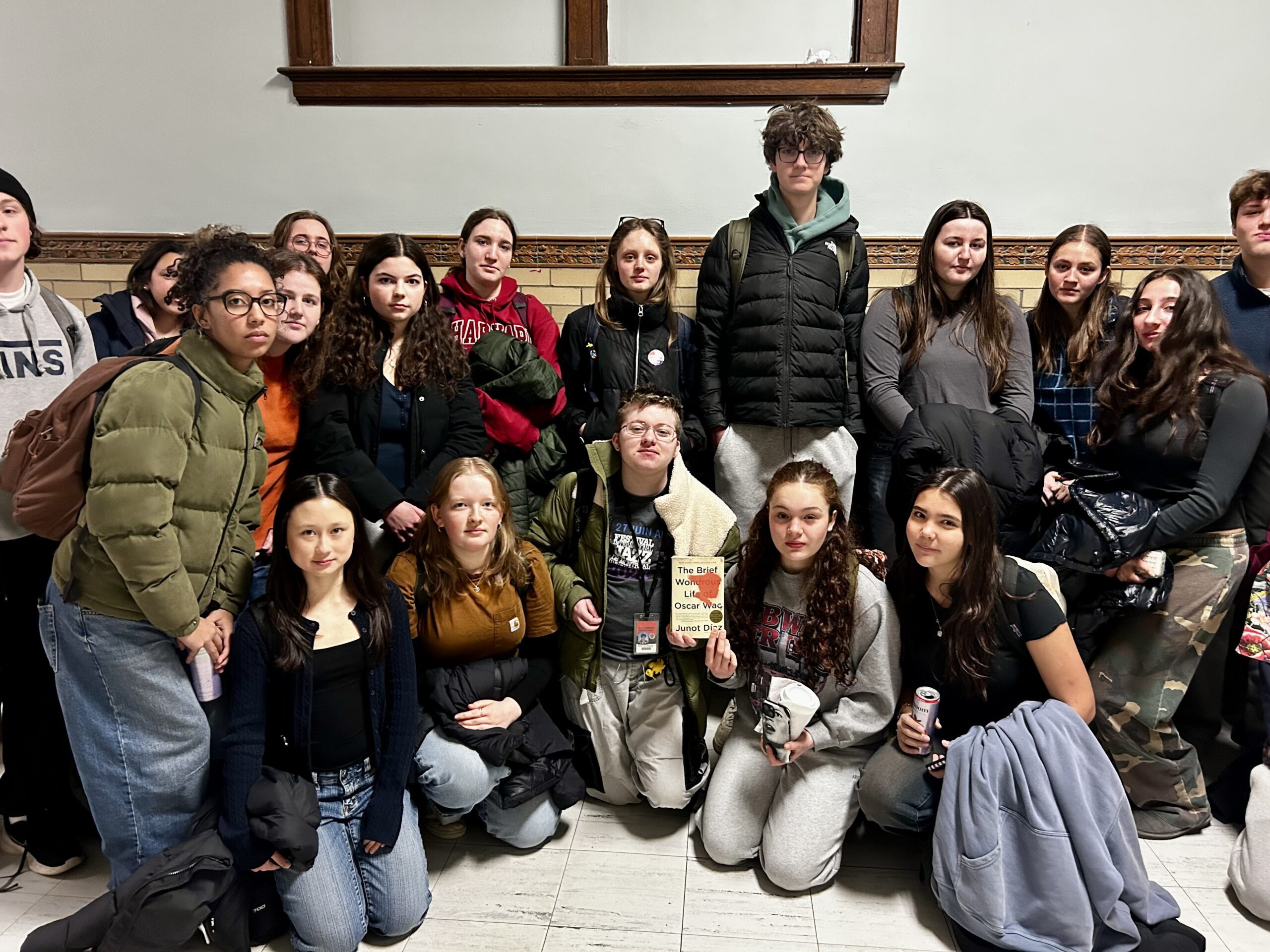
Period 3 Lit class
Shortly after handing out copies of Oscar Wao to her classes, Ms. Martling received a directive from Interim Supervisor of English Language Arts Suzanne Ackley that prohibited her from teaching the book. In an email to classes, Martling said, “While I advocated for your ability to read this text, including providing an alternative read, I can no longer proceed given the administrative directive to stop all instruction effective immediately.”
When asked to comment, Superintendent of Schools Jason Bing sent a lengthy statement (see attached below), stating in part, “As educators, we have the dual responsibilities of presenting our students with a rich and challenging education, using a myriad of instructional texts, and as well to protect and support their well-being, including mental health. Unfortunately we are in a moment in our community where we are experiencing a rash of mental health struggles both locally and across the nation, incidents of self-harm, and two recent tragic deaths.”
Bing added, “Given that the novel contains significant themes related to violent death, self-harm, and depression, it was determined that temporarily removing the text was the most responsible and supportive choice for our students at this time.”
Bing said the book was not permanently taken out of the curriculum, and is still available in the school library, but students say they still feel it is censored.
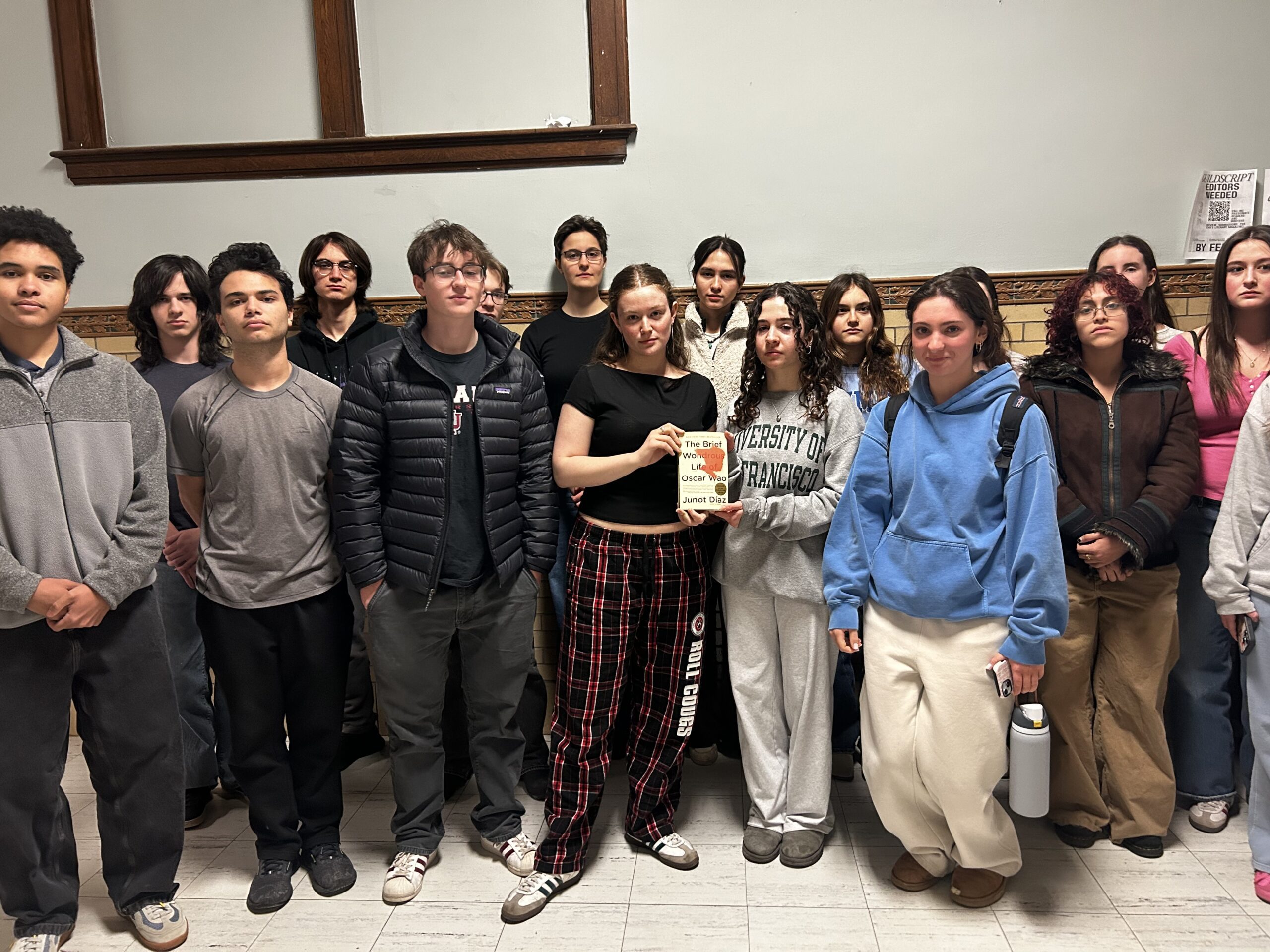
Period 7 Lit class
“Book banning is blatant censorship and should not be tolerated,” said senior Ellie Tamir-Hoehn. “Telling a teacher there are consequences for analyzing literature is foul and indicative of the definition of a book ban: not allowing us literary autonomy.”
The petition (full text below), which seeks to bring the book back into their classroom, explains why the students believe the District has no right to take it away and has been signed by all 47 AP Lit students, and 135 students not taking the course.
Per the petition: “During a time of censorship on the national level, banning books sends a dangerous message about what we want being taught in our classrooms.”
The social-emotional needs of a student body that recently lost a classmate are not being taken lightly, and CHS administration has made social workers and counselors available to help those who are grieving. At the Maplewood Board of Health Meeting on Feb. 3, Board of Health Chair Dean Dafis discussed mental health and the effect of recent deaths on students, saying, “I’d like us to get together and figure out how we could do more community outreach, how we can do some positive messaging. It’s also very complicated and full of stigma, and very difficult for people to talk about or ask for help as it is.” Dafis made his comment after South Orange-Maplewood Health Officer Candice Davenport shared a slide promoting the 988 national mental health and suicide prevention hotline.
Students are asking for dialogue.
AP Lit student Felix Reichman-Curnow says, “Allowing informed discussions about difficult issues is, in my opinion, the best way to reduce stigma around them.”
Another student, Lydia Ebinger, points to 47 signatures. “How often do you see a bunch of teenagers agree on something unanimously?”
Other approved books in CHS English curriculum that contain themes of suicide, such as Hamlet by William Shakespeare, are not being removed from the classroom, though they are being taught at the same time.
Contacted for comment, author Junot Diaz responded to an email, writing, “Literature teaches us not to be better people or better thinkers or to resist tyranny; literature teaches us that such choices are possible — and it teaches us that these choices are possible in the private fire of our minds, beyond the reach of opportunists, charlatans, despots and what Jáchym Topol called the most repulsive human species, cowardly teachers. This is why books are always under attack — because when we read, when we inhabit art, the worst cannot stop the best. When we fight for books for art we fight not only for the best school we’ll ever have, we fight for all our possible selves.”
Students also note that Resolution 4518, “Right to Read”, passed by the Board of Education in 2023, says that “SOMSD hereby officially denounces any and all efforts to ban books in public schools and public libraries.” AP Lit students plan to protest the decision at the February 26 Board of Education meeting, and are encouraging the community at large to join them.
Ella Levy is a 12th grade student at Columbia High School and is working as a paid freelancer with Village Green as part of a grant from the New Jersey Civic Information Consortium.
Following is the AP Lit student petition:
To Administration of Columbia High School,
The AP Literature & Composition student body has been alerted that The Brief Wondrous Life of Oscar Wao by Junot Diaz has been pulled from the curriculum by English and Language Arts Department supervisor Ms. Suzanne Ackley. This decision comes at a moment when the integrity of education in the United States is actively being threatened. Under the current presidential administration, it is imperative that the censorship of literature not be perpetuated. English classes at Columbia High School have already read the book and attested to its message being one of utmost importance, one vital to our AP Lit curriculum and our understanding, as young people, to the realities of the post-colonial world. During a time of censorship on the national level, banning books sends a dangerous message about what we want being taught in our classrooms. By censoring literature, the South Orange and Maplewood School District is feeding into the current administration’s goal to block sustainable and meaningful education through censorship. The censorship of certain topics diminishes the ability of students to receive a comprehensive education; a complete education demands exposure to a variety of tough material and topics. As students in AP Lit, we believe engaging in difficult texts is not only appropriate, but necessary. The teacher of the class has furthermore agreed to provide an alternate novel if this one poses as an issue for certain students, and in class social worker support. AP Lit students have also expressed that they would be willing to sign a permission form in exchange to read the book.
In light of recent events at Columbia High School, it is more important than ever to sympathize and understand how mental health issues impact all people. By reading The Brief Wondrous Life of Oscar Wao, the students of AP Lit will have the opportunity to be enlightened about the importance of mental health. Shielding these issues does not assist in empathy or understanding, but rather marginalizes them and renders them invisible. We are eager to approach this novel to understand the realities of mental health issues and their prevalence today which has helped students utilize the material for not only AP exam essay writing, but for personal exploration as well. Furthermore, the story’s discussion of immigration and acclimation to a new region remains important to empathize and understand why the current administration’s actions towards immigrants—especially those of Latin American origin—is foul and vile. By learning about the toll the immigration process takes mentally through Oscar Wao, a Dominican-American protagonist, students will further augment their empathy and knowledge regarding immigration and post-colonial affects.
As the student body of AP Lit we are concerned by the blatant censorship Columbia High School’s ELA department has chosen to take part in, and feel compelled to respond. Banning one book sets the precedent for more and more book bans that limit the integrity of our education. We want to understand and learn from difficult stories, even in the presence of tragic circumstances in our community.
Best,
The AP Lit student body
Attached is the letter from Supt. Jason Bing to Village Green: