As a New Jersey native and a lifelong Democrat, I’m grateful for the recent Democratic sweep in last year’s Governor’s and State Legislative races, as well as our state’s recent electoral reforms.
Even with these reforms, however, good government work still has a ways to go in New Jersey, and has even recently regressed, with regard to allowing voters to choose their party representatives.
There is one issue that I believe is important but has largely gone unaddressed, and which is relevant to Essex County’s Democratic Party’s upcoming convention, which is how our State Committee members are chosen.
In New Jersey, as with other states, each political party elects members to its State Committee. Members of the State Committee are responsible for strategic party decisions, including electing the state party chair and writing the party’s bylaws. In New Jersey, State Committee members from each party are meant to be elected for a four-year term, in gubernatorial election years.
Until very recently, State Committee members in New Jersey were elected by voters during primary elections.
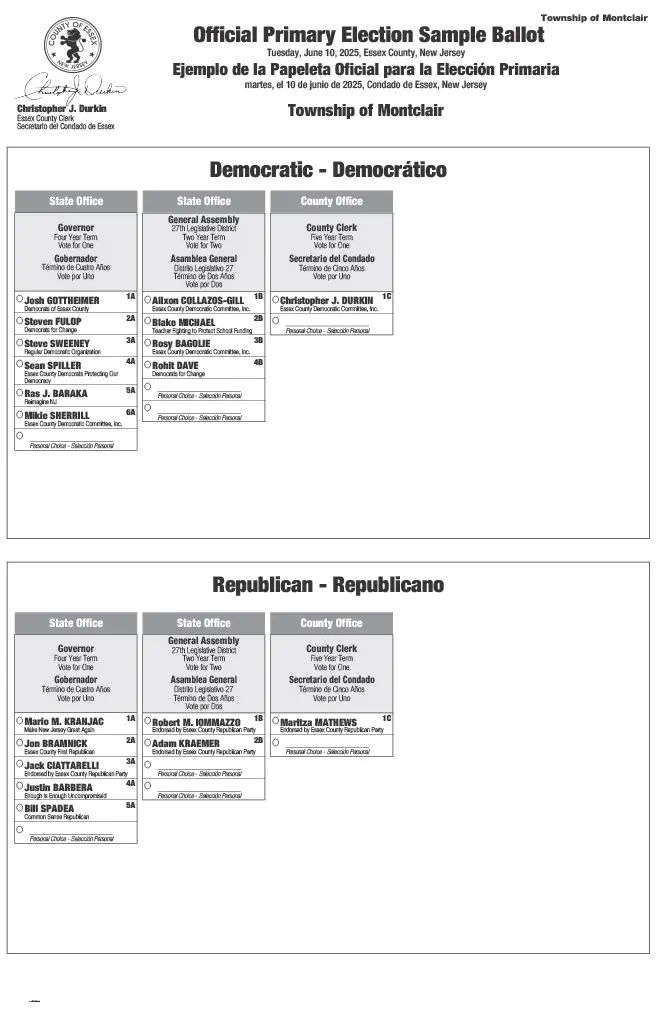
This all changed in 2024, with the passage of the new ballot bill, a piece of legislation best known for eliminating the county line, a design that allowed county party leaders to give preferential ballot placement to endorsed primary candidates. But inexplicably included in this bill was a provision that each party’s State Committee candidates would no longer be elected by voters, and would instead be chosen by members of each party’s County Committee (in Essex County, also known as district leaders).
How does disenfranchising voters find its way into ballot design legislation?
State Committee candidates typically have minimal name recognition, so under the county line, it was especially helpful for county-endorsed candidates to be listed next to the endorsed candidate for Governor and other higher offices.
But as we’ve seen in the last few, post-line elections, candidates without the party’s endorsement are now able to win handily.
My impression is, and apologies if this sounds cynical, that, as a workaround, legislators punted the State Committee elections away from voters and up to County Committee members, allowing party leadership to retain some degree of control over who gets elected. Now that the election for State Committee has been taken away from voters, election by County Committees is the end of the road to winning a seat.
In Essex County, it gets stickier. The new ballot bill has this to say about the State Committee elections:
“The members [of the State Committee] shall be elected by the members of the county committee of the respective political parties, at a time and in a manner to be determined by each respective political party, and in accordance with the constitution and bylaws of such party.”
So, language in the bill leaves a lot of wiggle room for how State Committee elections should actually be accomplished by the various county parties. Presumably, elections for State Committee should still take place every four years, although even this is unclear. In some counties, State Committee members were elected at their county convention prior to last year’s primary election. Other counties held a special election for their county committee members to vote around that time.
But this was not the case here in Essex County, at least within the Democratic Party.
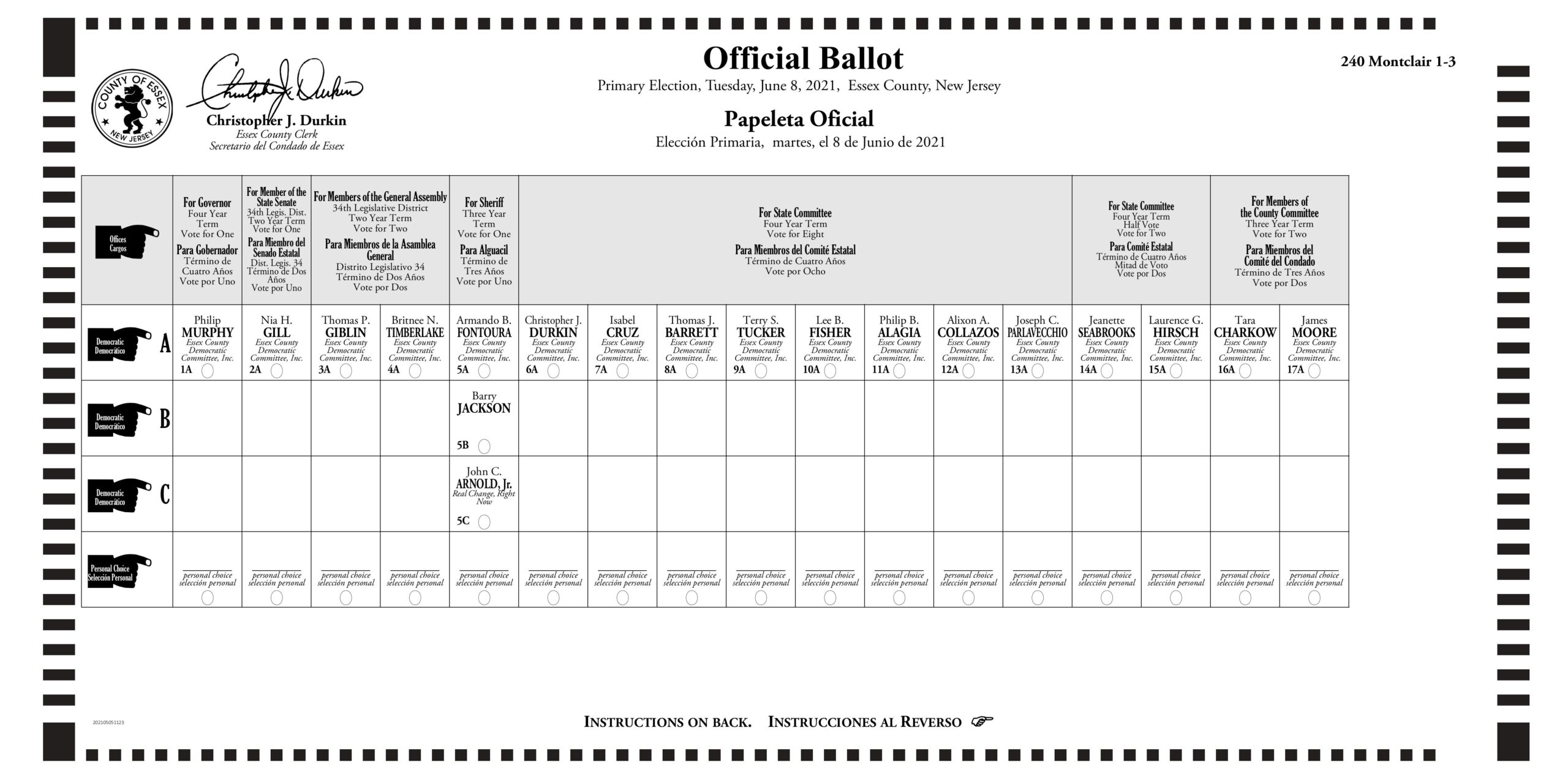
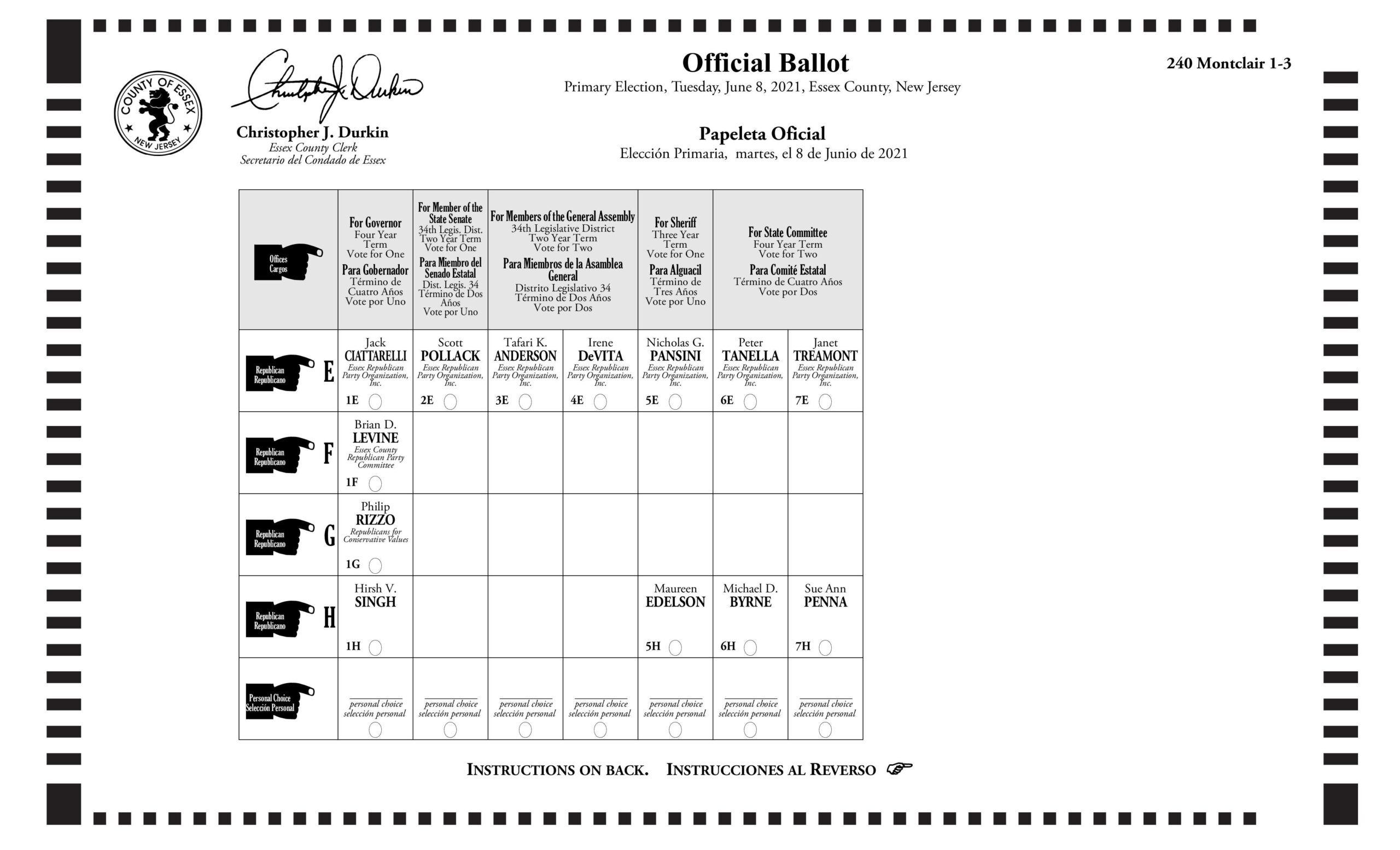
State Committee members weren’t elected during the Essex County Democratic convention last spring, and as far as I know, neither has there been any special election for this position. The existing Essex County Democratic Committee (ECDC) bylaws are from 2003, and they make no mention of how State Committee members should be elected. The current Democratic State Committee members for Essex County are the same candidates who were listed on the 2021 primary ballot. (And, although the ECDC has not held an election for State Committee, the Democratic State Committee did hold an election for State Chair shortly after the primary, at which LeRoy Jones, who also serves as the ECDC chair, was reelected to the position by sitting State Committee members.)
I heard from ECDC leadership that the ECDC was planning to hold an election for State Committee, and that the deadline to submit a request for the ECDC endorsement was on February 27, but again, nothing official had been communicated. Only much after the February 27 deadline did the ECDC website post about this election, along with its 2026 convention rules.
Prior to that, as far as I am aware, none of this information was made public, including who is eligible, or what interested individuals needed to do, to run for this office (again, State Committee is no longer on the ballot, so candidates can’t go the usual route of getting signatures and filing with the clerk), or when and where the election would take place.
As a voter, I don’t know where members of the public are meant to turn to ensure that this new, legally mandated process for electing State Committee members is followed by each party and by each county. What I do know is that moving these positions from primary ballots already weakened democratic participation. Failing to hold or provide transparency about the required elections weakens it further. When we say No Kings, we mean it locally, and for all political stripes. Essex County voters deserve transparency, accountability, and a clear process. At the very least, we deserve to know who is representing us, and how they got there.
Rebecca Scheer is former Maplewood Democratic District Leader and former Vice Chair of the Maplewood Democratic Committee. She is currently serving on the board of the Good Government Coalition of New Jersey.