In effort to reduce students’ screen time and distractions at school, the South Orange-Maplewood School District will implement changes to its technology use policies next year, further limiting the use of Chromebooks and cell phones as well as internet access.
In a letter sent to families on Tuesday, April 7, Superintendent of Schools Jason Bing outlined the new policies for 2026-2027 and said, “As we navigate an increasingly digital world, SOMSD remains committed to ensuring that technology serves as a purposeful tool for learning rather than a distraction from development.”
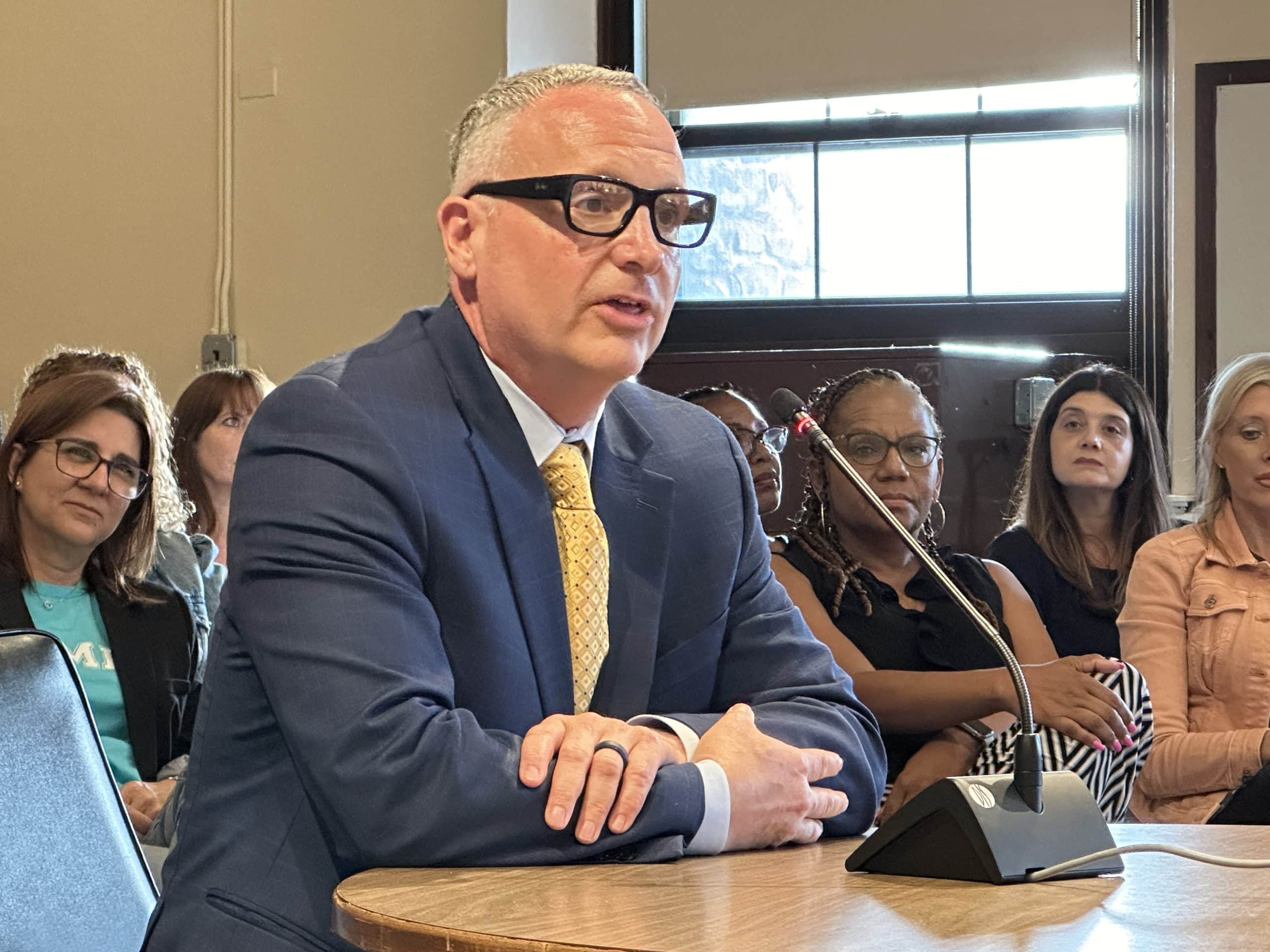
South Orange-Maplewood Superintendent of Schools Jason Bing
“Our primary focus is — and always will be — the mental health and social-emotional well-being of our students,” he wrote. “Recent data and feedback from our educators suggest that ‘always-on’ connectivity can impact attention spans, social interactions, and overall student anxiety.”
The goal of the District’s policy change is to “reclaim the ‘human’ element of education,” Bing wrote. “By reducing screen saturation, we aim to improve student focus, reduce cyber-bullying opportunities, and support the developmental need for unstructured, screen-free play and socialization.”
According to the letter, the District’s current ban of cell phones in grades PreK through 9 will extend to 10th and 11th graders next year, and the District will introduce a parental control feature on Chromebooks for grades 6 through 12. (At the grade school level Chromebooks will remain in school and access will be controlled by the District.)
To encourage more social time, Chromebooks will be prohibited during lunch and recess for students in elementary and middle school. Other changes for students in PreK through 5th grade include no longer having access to YouTube, and students in grades 3 through 5 will learn an analog skill: how to read and write in cursive.
“By ensuring students have meaningful time away from screens,” Bing wrote, “we can better protect instructional quality and foster a healthier daily learning environment for every child.”
As background, Bing explained that in the 2024-25 school year, the District community read Jonathan Haidt’s The Anxious Generation, which “served as a sobering wake-up call for all of us.”
“Through our discussions, we grappled with the shift from a ‘play-based’ to a ‘phone-based’ childhood, realizing how the rapid influx of social media and constant connectivity has restructured the mental landscape of our younger generations,” he said. “We walked away with a collective commitment to fostering more offline ‘free play’ and establishing firmer digital boundaries to combat the rising tide of sleep deprivation and social fragmentation.”
This year, Bing wrote, the District has chosen Stolen Focus: Why You Can’t Pay Attention and How to Think Deeply Again by Johann Hari. (See more in the attached letter.)
The District is also exploring setting appropriate screen time limits and is establishing an AI Committee to “evaluate the ethical, academic and psychological implications of Artificial Intelligence in the classroom.”
“We recognize that technology is a permanent fixture in modern life, but it must be used with discipline,” Bing told families in his letter. “We appreciate your partnership as we refine these boundaries to better support your child’s health and academic success.”
Bing’s full letter is below: